What is my broken Land Rover worth?
If your Land Rover has recently developed a major fault, you’re probably asking yourself this exact question.
Whether you’ve been quoted thousands of pounds for an engine repair, your vehicle has failed its MOT, or you’ve been told the DPF, timing chain or air suspension needs attention, it can be difficult to know where you stand financially.
Many owners automatically assume that a broken Land Rover is worth very little. In our experience, that’s often not the case.
At We Buy Broken Land Rovers, we speak to owners across the UK every day who are surprised to learn their vehicle still has value despite significant mechanical problems. While faults will obviously affect what a vehicle is worth, a major repair bill doesn’t necessarily mean the vehicle has become worthless overnight.
Understanding what influences a valuation can help you decide whether repairing or selling is the right option.
Written by We Buy Broken Land Rovers Team
Last Updated: June 2026
Quick Answer
A broken Land Rover can still have significant value, even if it doesn’t start or requires major repairs.
The exact figure depends on factors such as:
- Model
- Age
- Mileage
- Service history
- Overall condition
- Nature of the fault
Every vehicle is different, which is why obtaining a valuation is usually the best way to understand your options.
Many owners searching “what is my broken Land Rover worth” are surprised to discover that even vehicles with major faults can still attract strong offers. The key factors are the model, condition, mileage and severity of the problem rather than simply whether the vehicle is broken.
Why a Serious Fault Doesn’t Automatically Make Your Land Rover Worthless
One of the biggest misconceptions we encounter is the belief that a major mechanical fault instantly wipes out a vehicle’s value.
It’s easy to see why people think this. When you’ve just received a repair quote for several thousand pounds, the vehicle can suddenly feel like more of a liability than an asset.
The reality is often very different.
Certain Land Rover models continue to attract strong demand even when they have significant faults. Specialist buyers, repairers and enthusiasts are often willing to purchase vehicles that need work, particularly if the rest of the vehicle is in good condition.
We’ve purchased vehicles with failed engines, timing chain issues, suspension faults and DPF problems that owners believed were virtually worthless. In many cases, they were pleasantly surprised by the valuation they received.
The fault matters, but it is rarely the only factor that determines value.
What Is My Broken Land Rover Worth in Today’s Market?
When we assess a vehicle, we’re looking at the complete picture rather than focusing on a single fault.
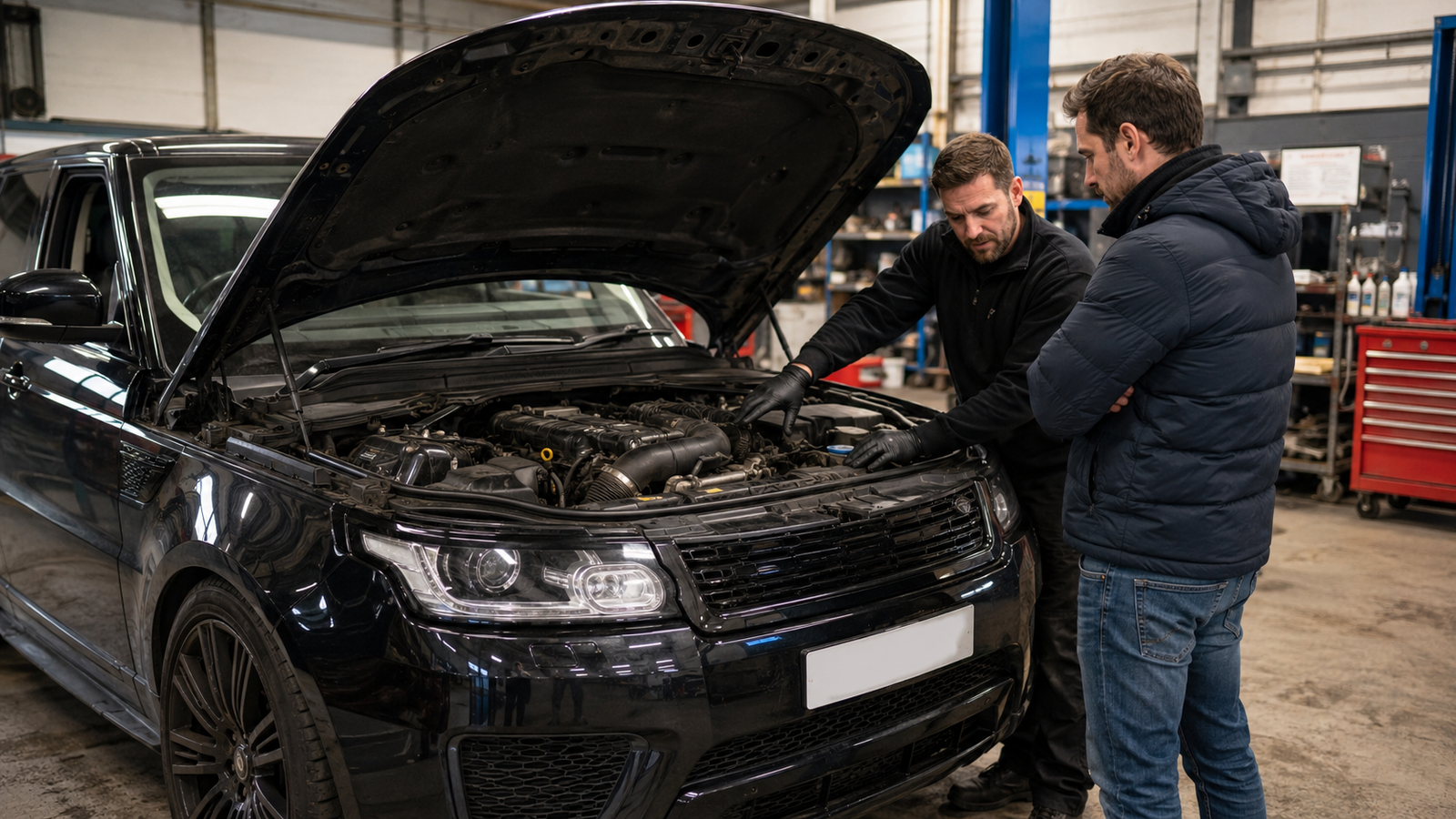
For example, a well-maintained Range Rover Sport with a timing chain issue may still be worth considerably more than an older vehicle with multiple faults and limited service history.
Some of the factors that influence valuation include:
- model and specification
- age and mileage
- service history
- mechanical condition
- cosmetic condition
- current market demand
This is why two vehicles with seemingly identical problems can receive very different offers.
The vehicle’s overall condition often tells us just as much as the fault itself.
Popular Models Often Retain Strong Value
Some Land Rover models tend to remain desirable regardless of whether they require repairs.
Vehicles such as the Defender, Freelander, Evoque and Range Rover Sport often continue to attract interest because of their popularity and strong demand in the used market.
A broken Defender, for example, may still have substantial value due to the continued demand for both complete vehicles and parts.
Likewise, newer Range Rover Sports and Evoques can still be attractive purchases for specialist buyers, even when major repairs are required.
This is one reason why it’s always worth obtaining a professional valuation before assuming the vehicle isn’t worth selling.
Does the Type of Fault Matter?
Absolutely.
Some faults are relatively straightforward to repair, while others can involve substantial labour and parts costs.
The most common issues we hear about include:
- timing chain problems
- DPF faults
- air suspension failures
- engine failure
- gearbox issues
- electrical faults
Certain faults can significantly reduce the value of a vehicle, particularly if they make it uneconomical for a private owner to repair.
However, even major engine problems don’t necessarily mean the vehicle has no value.
When assessing what my broken Land Rover is worth, specialist buyers will usually consider both the repair costs and the desirability of the model. A popular vehicle with a significant fault can often retain more value than owners expect.
We recently explored this in our guide:
Should I Repair or Sell My Range Rover With Timing Chain Problems?
Timing chain repairs are one of the most common reasons owners decide to seek a valuation.
What If My Land Rover Doesn’t Start?
Many of the vehicles we purchase are non-runners.
Some have suffered engine failure. Others have electrical faults, suspension issues or problems that make them impractical or uneconomical to repair.
The fact that a vehicle won’t start doesn’t automatically prevent it from being sold.
In fact, many owners contact us specifically because the vehicle has become unusable and they want to avoid spending further money trying to diagnose or repair it.
Whether the vehicle starts, drives or requires recovery, we can still provide a valuation.
Should You Repair or Sell?
This is often the biggest decision owners face.
In some situations, repairing the vehicle makes perfect sense. If the fault is relatively isolated and the vehicle is otherwise in excellent condition, investing in repairs may be worthwhile.
However, there are also situations where selling becomes the more practical option.
This is particularly common when:
- repair costs are high
- multiple faults are developing
- the vehicle has high mileage
- confidence in the vehicle has been lost
We’ve seen many owners reach a point where they’re no longer asking whether the vehicle can be repaired. Instead, they’re asking whether they want to continue investing money into it.
How Our Valuation Process Works
Step 1: Complete the Online Form
Submit your registration number, mileage and basic details about the vehicle and its faults.
Step 2: Receive a Quote
We usually aim to provide a rough valuation the same day. Additional information and photographs can help us provide a more accurate figure.
Step 3: Collection and Payment
If you choose to proceed, we can arrange nationwide collection and same-day payment where available.
Related Guides
If your Land Rover has developed a specific fault, you may also find these guides useful:
Can I Sell My Land Rover With DPF Problems?
Should I Repair or Sell My Range Rover With Air Suspension Problems?
These articles explain some of the most common reasons owners decide to sell rather than repair.
Frequently Asked Questions
Can I sell a broken Land Rover?
Yes. We regularly buy Land Rovers with mechanical faults, MOT failures and major repair requirements.
Does engine failure make a Land Rover worthless?
No. Many Land Rovers with engine problems still retain value depending on the model and overall condition.
Do you buy non-running Land Rovers?
Yes. We regularly purchase non-runners from owners across the UK.
How quickly can I get a quote?
We usually aim to provide a rough valuation on the same day.
Do you collect vehicles nationwide?
Yes. We offer nationwide collection throughout the UK.
So What Is My Broken Land Rover Worth?
A major fault can be frustrating, particularly when you’re facing a substantial repair bill. However, it’s important not to assume that a broken Land Rover has no value.
In our experience, many owners are surprised by what their vehicle is still worth, even when significant repairs are required.
If you’re still wondering what your broken Land Rover is worth, obtaining a professional valuation is usually the quickest way to get an accurate answer. Every vehicle is different, and market demand can vary considerably between models and specifications.
Whether you’re dealing with engine failure, DPF issues, suspension faults or an MOT failure, obtaining a professional valuation is often the best place to start. It gives you a clearer picture of your options and helps you make a more informed decision about whether repairing or selling makes the most financial sense.