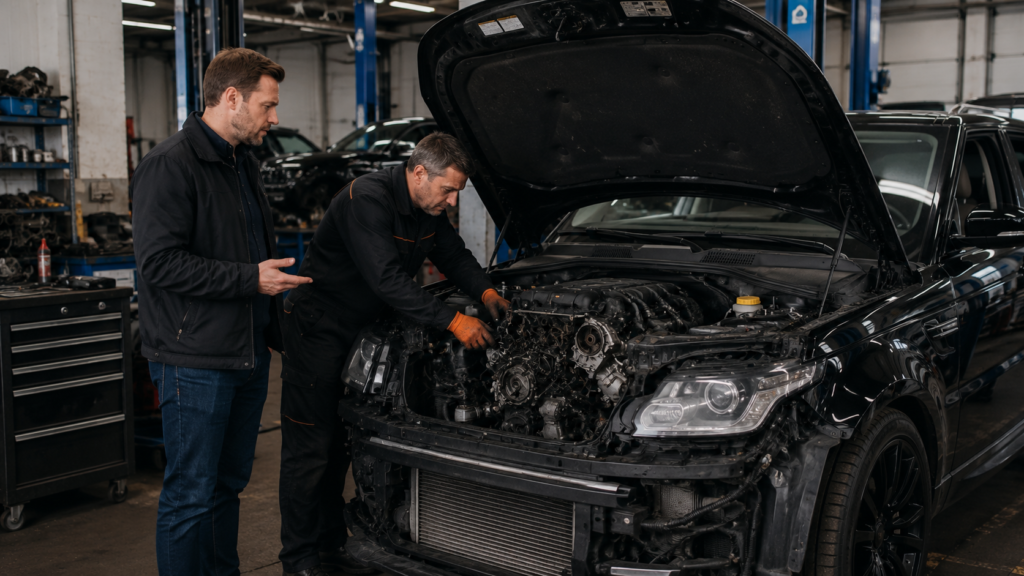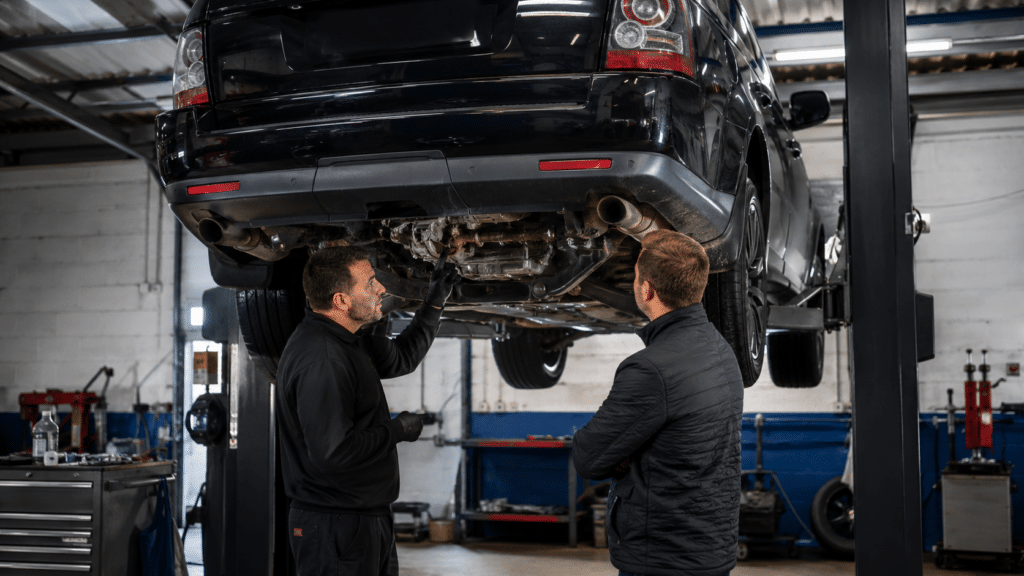
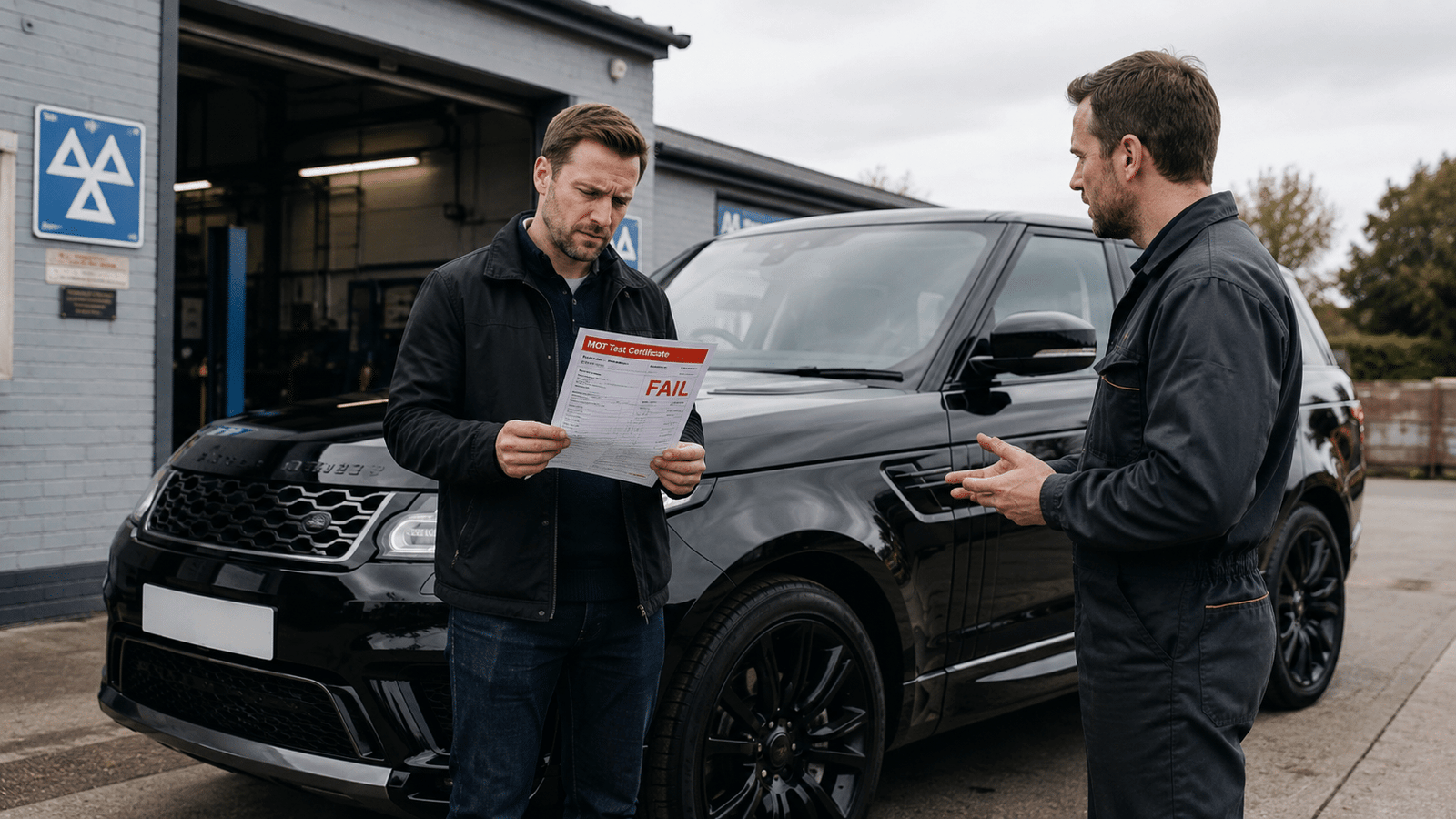
A Range Rover that starts after charging but fails again the following morning needs more explanation than another battery quotation. The first question is whether the battery has deteriorated, charge is not being replenished, or something is consuming too much power while the car is parked.
A low-battery warning and a confirmed battery-drain fault are different findings. Establish which complaint the workshop is investigating before approving more parts. This guide concerns the low-voltage vehicle battery, rather than a plug-in hybrid’s traction battery.
What does the warning actually tell you?
Write down the exact message and whether it appears with the engine running, after parking or while using equipment with the engine off. These circumstances help distinguish the complaint from a general report that the car has electrical problems.
Land Rover’s published battery guidance describes energy management that shuts down non-essential systems to preserve charge. A protective shutdown does not identify a failed component.
Instructions and warning wording vary. Use the handbook for your exact model and year, and seek qualified assistance for a charging warning or a car that cannot safely continue. Do not borrow charging connections or a reset procedure from a different Range Rover.
Why a replacement battery may not settle the problem
A flat battery may be a result as well as a cause. Ask what the previous test established, which battery was fitted and whether the model-specific replacement requirements were completed. Keep the invoice and test result rather than relying on the description ‘new battery’.
Land Rover’s 2019 flat-battery diagnostic communication addresses intermittent complaints across specified Discovery and Range Rover models. It lists parked consumption, battery condition, software and wiring among the possibilities and directs technicians to a structured test plan.
That historical document is not a diagnosis of your vehicle or a promise of a free repair. Its useful lesson is that one symptom can have several explanations. Ask a specialist to confirm the current procedure and applicability to your car.
Ask what has been measured
The workshop should explain the evidence about battery condition, charging performance and consumption when the vehicle is parked. If an excessive parked draw is suspected, ask whether the car completed its normal shutdown sequence before the measurement was assessed.
An intermittent complaint can be harder to capture during a short appointment. Clarify whether the booking includes an overnight observation, what the initial diagnostic charge covers and when further work needs your approval. A single satisfactory reading does not explain a fault that occurs only occasionally.
Ask for a written conclusion that distinguishes confirmed findings from proposed further tests. You do not need to choose the technician’s test equipment; you do need to understand what the next paid step is intended to establish.
Give the technician a useful parking history
Record how long the car is normally left unused, the length of its journeys and how quickly the problem returns after charging. Include when the fault began and whether it followed repairs, accessory installation or water ingress.
Mention trackers, dashcams, diagnostic-socket devices and other added equipment. Their presence does not prove they are responsible. It does give the workshop a fuller picture than investigating a vehicle assumed to be completely standard.
Describe any other symptoms: equipment apparently remaining active after locking, unexplained alarms or intermittent access problems. Avoid pulling fuses, disconnecting modules or clearing codes to imitate an online fix before the evidence has been recorded.
How to assess the repair proposal
Request the diagnosis, proposed work, total including VAT and the method for checking the original complaint afterwards. If parts are being replaced, ask why those parts are implicated and what remains uncertain.
A quotation for battery replacement is a different scope from tracing an intermittent wiring or module problem. There is no single credible price for all Range Rover battery-drain repairs. For an open investigation, agree a spending limit and the point at which the workshop should contact you again.
Consider the rest of the vehicle too. A manageable electrical repair may be worth completing if you want to keep the car. The warning alone does not make it uneconomic.
Can you sell with the electrical problem unresolved?
You can request an offer before authorising further repairs. Describe the symptoms honestly, include existing reports and make clear when the cause is unconfirmed. Our broken Land Rover valuation guide explains the factors considered alongside the fault.
For a Velar, our Velar selling page covers an enquiry about the complete car. Include its mileage, history and other defects, rather than pricing it from the battery problem alone.
Request a free valuation to compare an as-is offer with the repair proposal. Tell the team if it will not unlock, roll or steer, and describe access before collection is arranged. Confirm the agreed price, any inspection conditions, payment and handover arrangements before proceeding.