“Restricted performance” tells you the car has detected a problem. It does not tell you which part to replace. That distinction matters when you are looking at a quote for a turbo, a DPF or an engine.
Before spending money, establish what the garage has found, how it tested the fault and what the repair will actually cover. A Range Rover that briefly drives normally after a restart still needs its warning investigated.
What does restricted performance mean?
An archived Land Rover handbook describes this message as an engine-management fault. It distinguishes a red warning, requiring a safe stop and qualified help, from an amber warning requiring prompt attention. This is an older handbook, so use the handbook for your own model and year for the applicable instructions.
Do not treat “limp mode” as a diagnosis. It describes how the vehicle behaves, often with reduced performance. The reason still has to be established.
Can you keep driving?
Check the full message, warning colour and any other alerts. If there is a red warning, overheating, an oil-pressure alert, a serious noise or power loss that makes driving unsafe, stop somewhere safe and arrange assistance.
An amber message is not permission to finish a long journey or tow a trailer. Get advice for the particular fault before continuing. Tell the recovery operator that the car has reduced power rather than trying to demonstrate the problem on the road.
What information helps the garage?
Write down what happened before the message appeared. Details are more useful than a guess at a failed part:
- Model, year, engine and mileage.
- Whether it happened cold, hot or under acceleration.
- Other messages, smoke, noises or changes in gear selection.
- Recent servicing, repairs or work on the battery.
- Whether a restart changed the symptoms, and for how long.
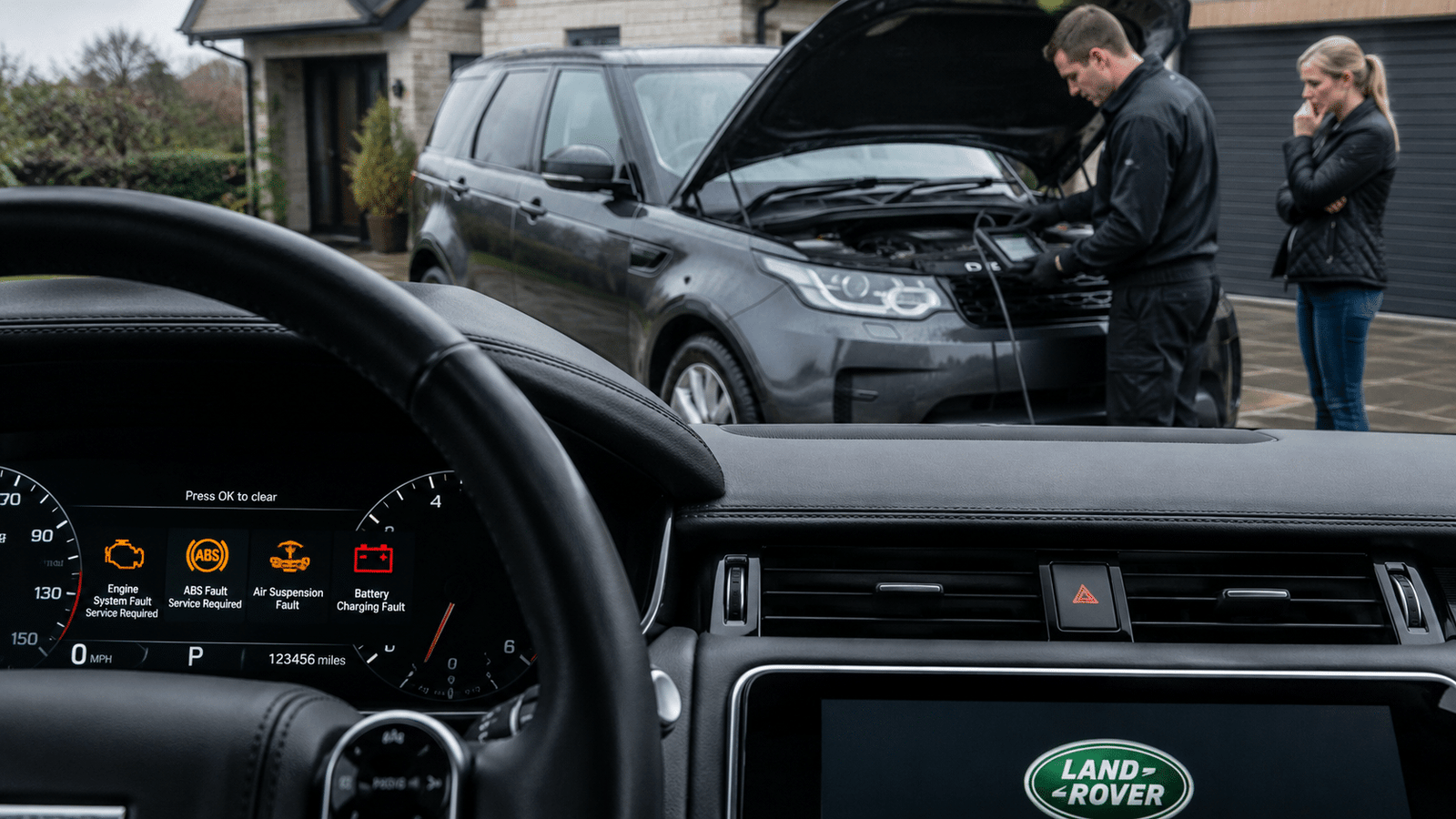
Photograph the dashboard when safely parked. Keep any existing diagnostic reports and invoices. A recurring fault can be harder to assess if its history has been lost.
What should a proper diagnosis tell you?
Ask for the stored fault codes and the tests that connect them to the proposed repair. If the quote says “turbo fault”, ask whether the turbo itself has been shown to be faulty, what else was checked and what remains uncertain.
A list of possible causes is not a repair plan. Nor is clearing a code evidence that the fault has been corrected. Ask how the garage will check its work and what happens if the warning returns.
If testing establishes a filter problem, our DPF article covers that decision. A confirmed transmission fault belongs with our gearbox repair-or-sell guide. Keep those separate from an undiagnosed dashboard message.
Is it worth repairing before selling?
Start with a written quote including parts, labour, VAT and follow-up checks. Ask about warranty cover before authorising work. If the garage needs further investigation, agree what that stage costs and when it must contact you.
Then compare an offer for the car now with its likely repaired value minus the full bill. An uncertain repair is a different decision from replacing one confirmed faulty component. Include other work already due, rather than assuming this warning is the only expense.
If you want to keep a vehicle that otherwise suits you, resale value is only part of the calculation. A defined repair may be preferable to buying another used car with an unknown history.
Can you sell with the warning still showing?
We Buy Broken Land Rovers accepts faulty and non-running Land Rovers and Range Rovers. Ask for a quote and include the warning, symptoms and any diagnosis. Say whether it starts, rolls and can be accessed for collection.
Describe what you know. If the cause is unconfirmed, say so. There is no need to turn a warning message into an invented diagnosis.
Prepared for We Buy Broken Land Rovers. Handbook sources checked on 13 October 2026.